
About Planning Live
Planning Live was developed by Helen Sanderson Associates as an inclusive and engaging series of conversations that brings all the people who are important to a person together, either in-person or remotely, to listen to what is important to them and discuss a range of options that culminate in desired outcomes and actions on which to base the planning of the person’s support.
Planning Live draws on skills, principles, and practices from the Learning Community for Person-Centered Practices, Michael Smull, John O’Brien, Beth Mount, Charting the LifeCourse, and Helen Sanderson Associates. These approaches are aligned with the skills needed to meet HCBS requirements for person-centered planning, the competencies defined by the National Center for the Advancement of Person-Centered Practices, and the provision for person-centered planning to support people who are transitioning to the self-determination program.
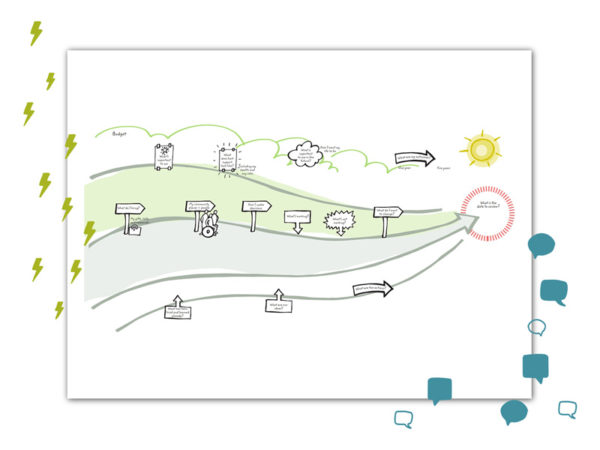
This Planning Live graphic is used to help a person build their person-centered plan in a visual way.
This helps everyone involved better understand the information gathered and how it will inform the supports needed for the person to have the life they want.
Participants will:
Things to consider:
“I really appreciate that the course was front-loaded with information about how to support individuals that do not use words to communicate.” – Rhiannon, Training Specialist & PCT Trainer
“The training has been both inspirational and empowering! I’ve been implementing what we’ve gone over with the people I currently support and it all I can think is where has this been?!” – Kasandra, Person Centered Trainer
Resource Materials and Coaching:
Planning Live Facilitator Resource Packs
Each participant will receive the following resources: (Planning Live Resource Guide, PCT Key Points and Top Tips Booklet, Planning Live Conversation Cards, Planning Live Participant Coursebook, Person-Centered Risk Resource Cards) Participants will have access to all training materials, PowerPoint decks, trainer notes, etc. to use to coach others within their organization.
Plan Facilitation Coaching
Each facilitator will receive coaching to review the one-page profile and to review the person-centered plan. Coaching calls are designed to:
Time Commitment: View the 2026 Cohort Syllabus
We will meet weekly on Tuesdays from 9am – 12pm PST and on Thursdays from 1:00pm -2:30pm PST Orientation session will be on March 26, 2026 from 9:30am – 10:30am PST
Cost:
$6,900 per person
Meet the Instructors:
Andrea Schacht is a Person-Centered Thinking Mentor Trainer, plan facilitator, and graphic recorder who brings decades of professional and lived experience along with warmth, creativity, and clarity to make person-centered work engaging, real, and accessible.
Shawna Hall is a certified Person-Centered Thinking Trainer and a self-advocate who ensures the voices of people with intellectual and developmental disabilities are heard. She draws on her lived experience and her certification as a Spiritual Director to bring authenticity to person-centered work.
Please confirm you want to block this member.
You will no longer be able to:
Please note: This action will also remove this member from your connections and send a report to the site admin. Please allow a few minutes for this process to complete.